
Understanding property boundaries before you buy is absolutely essential for protecting your investment. My Boundary Dispute Surveyors are regularly contacted by property buyers who've discovered boundary disputes only after completing their purchase, leading to expensive legal battles and potential loss of land they thought they were buying. This comprehensive guide will help you conduct thorough boundary checks during the property purchase process, know when to commission a professional boundary survey, and protect yourself from inheriting boundary problems that could cost tens of thousands of pounds to resolve.
Why Boundary Checks Matter When Buying Property
Many property buyers focus primarily on the condition of the building itself, commissioning structural surveys and checking for damp or subsidence. However, boundary issues can be equally costly and are often overlooked until after completion when it's too late to withdraw from the purchase. The financial and practical consequences of buying a property with boundary problems include inheriting ongoing boundary disputes with neighbors that can take years and cost tens of thousands of pounds to resolve, discovering you don't actually own land you thought was included in the purchase such as parking spaces, driveways, or garden areas, finding that planned building projects cannot proceed due to boundary uncertainties, being unable to sell or remortgage the property in future due to unresolved boundary questions, and facing legal costs defending claims from neighbors about encroachment or adverse possession.
According to data from property disputes, boundary issues are among the most common causes of neighbor disputes in England and Wales, with thousands of cases reaching court each year. Many more cases are settled before trial at significant cost. The good news is that most boundary problems can be identified before you commit to buying, allowing you to either withdraw from the purchase, negotiate a reduced price, or require the seller to resolve the issues before completion.
The Limitations of Standard Surveys
Most property buyers commission a homebuyer's report or building survey to assess the property's condition. However, these standard surveys have significant limitations when it comes to boundaries. A typical homebuyer's survey or building survey does not verify boundary positions or ownership, does not check whether fences, walls, or hedges match the title plan, does not identify potential boundary disputes with neighbors, does not investigate historic boundary evidence or changes, and provides only limited comment on obvious boundary issues. The surveyor will typically state that they haven't verified boundaries and recommend that your solicitor confirms these through the conveyancing process. However, solicitors' boundary checks are also limited, usually extending only to reviewing the Land Registry title plan and register without detailed technical analysis.
This is why an additional specialist boundary survey from an experienced land surveyor can be invaluable when buying property, particularly if there are any warning signs of potential boundary issues.
Essential Document Checks During Conveyancing
Your conveyancing solicitor will obtain and review certain key documents during the purchase process. You should ensure they check specific boundary-related information in these documents.
The Land Registry Title Plan
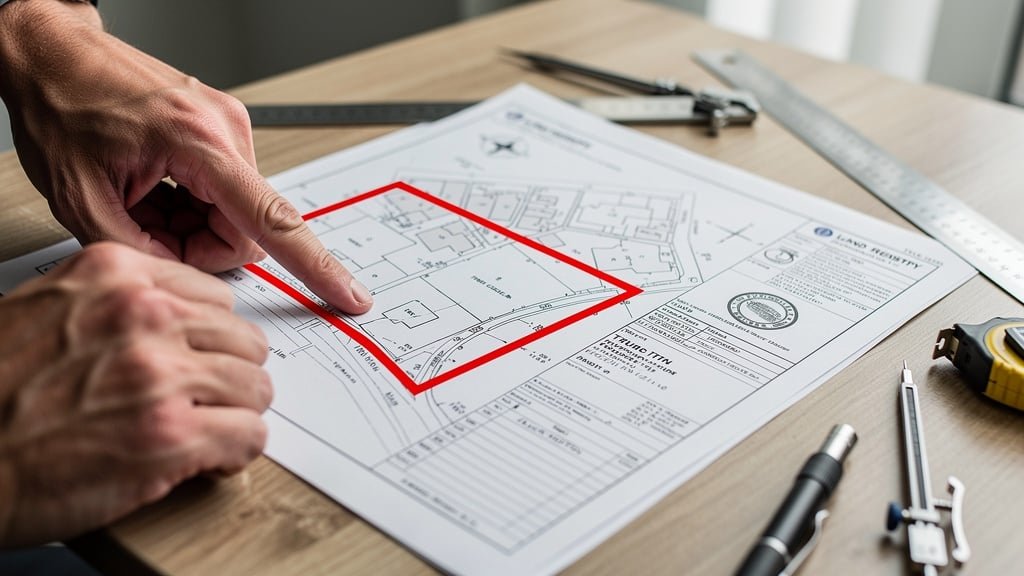
The Land Registry title plan is the most important document for understanding what land is included in your purchase. Your solicitor should obtain the official title plan and check the red line boundary showing the extent of the property you're buying, any colored tinting indicating rights over other land (green) or third-party rights over your land (brown), T-marks or H-marks indicating boundary maintenance responsibilities, the scale of the plan and any limitations this creates for boundary accuracy, any notes or references to filed plans with additional boundary detail, and whether the plan has been updated recently or might not reflect current physical features.
Crucially, remember that Land Registry title plans operate under the general boundaries rule, meaning they show only approximate boundary positions, not exact locations. The red line on your title plan might be several meters from the true legal boundary, especially on plans at larger scales like one to twenty-five hundred. If precise boundaries are important for your intended use of the property, you may need to commission a specialist boundary survey.
The Title Register
The title register document accompanies the title plan and contains crucial information that isn't shown graphically. Your solicitor should review the property register section for descriptions of boundary features, references to boundary agreements or determined boundaries, mentions of rights of way or access affecting boundaries, and any exceptions or limitations to what's included in the title. Check the charges register section for restrictive covenants affecting boundary features such as requirements to maintain walls or hedges, easements giving others rights over your land, and any disputes or cautions registered against the property.
Property Information Forms
Sellers must complete Property Information Forms (TA6 and TA10) providing information about the property. Your solicitor should carefully review the seller's answers about boundary disputes or complaints from neighbors, boundary features they're responsible for maintaining, any boundary agreements with neighbors, whether boundaries have been altered or disputed, and details of any structures that cross or encroach on boundaries. Be particularly alert if the seller answers "not known" to boundary questions, as this may indicate they're avoiding disclosure of known problems. Your solicitor can raise follow-up enquiries requiring more specific answers.
Previous Deeds and Conveyances
For properties with older titles, historic deeds and conveyance documents can contain valuable boundary information not shown on modern title plans. Your solicitor should request that the seller provides old conveyance deeds if available. A boundary surveyor can analyze these for written descriptions of boundaries, measurements or dimensions, references to specific boundary features, information about boundary maintenance responsibilities, and historic plans that may show more detail than current title plans.
Physical Inspection: What to Look for When Viewing
When viewing the property, conduct your own visual boundary inspection to identify potential issues that warrant further investigation.
Comparing the Ground to the Title Plan
Take a copy of the title plan with you when viewing and try to compare it to what you see on the ground. Look for obvious discrepancies between the red line on the title plan and physical boundary features like fences, walls, or hedges, boundary features that appear newly erected or recently moved, gaps or overlaps between your boundary and neighboring properties, and disputed or unclear boundary sections with no clear physical demarcation.
Remember that small discrepancies are normal due to the general boundaries rule, but significant differences (more than a meter or two) warrant investigation. Take photographs during your viewing showing all boundary features from multiple angles, focusing on areas where boundaries appear unclear or disputed. These photos will be valuable if you later commission a boundary survey.
Signs of Boundary Disputes
Look for visual indicators that boundary disputes exist or have occurred. Warning signs include double fencing where both you and your neighbor have erected separate fences with a gap between them, newly erected or partially completed boundary features suggesting recent disagreement, damaged or removed boundary markers, inconsistent boundary treatments such as half a fence line being well-maintained and the other half derelict, visible evidence of alterations or repairs to boundary positions, and encroachments where structures like sheds, garages, or extensions appear to cross boundary lines.
If you notice any of these warning signs, ask the seller directly about the situation and ensure your solicitor raises detailed enquiries about boundaries with the seller's solicitor.
Access and Rights of Way
Carefully check how you would access the property and whether any access routes cross land that isn't included in your title. Issues to investigate include shared driveways or access roads that might give neighbors rights over your land, access paths that appear to cross your boundary but serve neighboring properties, whether you need to cross other land to access your parking or garden areas, and whether the access arrangements match what's shown on the title plan and described in the title register. Access disputes are particularly complex and expensive to resolve, so identifying issues before purchase is crucial.
When to Commission a Pre-Purchase Boundary Survey
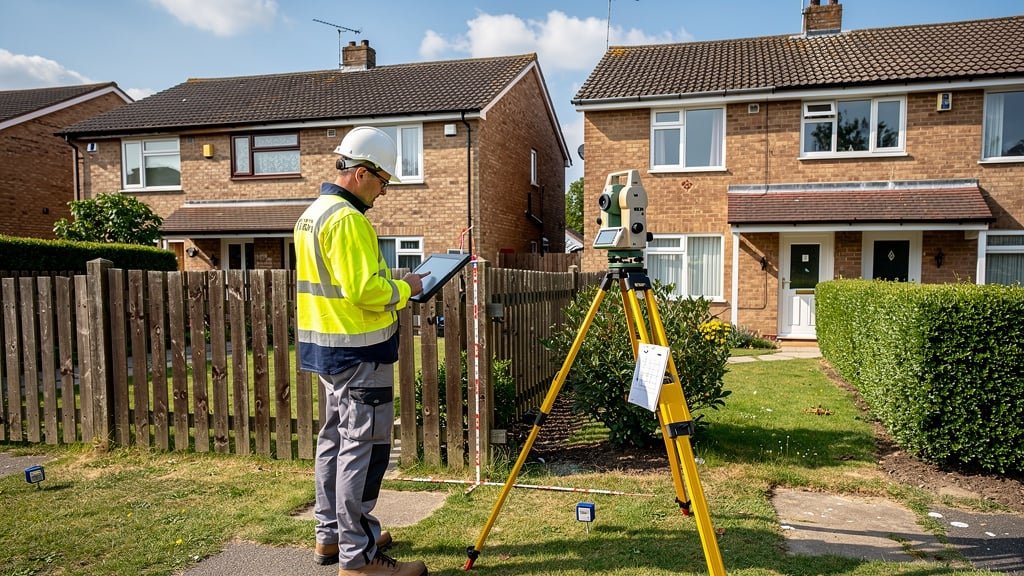
A specialist boundary survey before completing your property purchase provides detailed technical analysis of boundary positions and potential issues. While not necessary for every purchase, a pre-purchase boundary survey is strongly recommended in certain circumstances.
Clear Indicators You Need a Boundary Survey
You should definitely commission a boundary survey before buying if the physical boundaries on the ground clearly don't match the title plan, the seller discloses known boundary disputes or uncertainties, neighbors mention boundary disagreements when you view the property, you plan to build an extension or structure near the boundaries, the property includes valuable land such as large gardens or development potential where boundary accuracy matters, there are obvious encroachments with structures crossing apparent boundary lines, access to the property appears to cross land not included in your title, or your standard building survey report raises boundary concerns.
A pre-purchase boundary survey typically costs between fifteen hundred and four thousand pounds depending on the property size and complexity. This investment can save you from buying into an expensive dispute or losing land you thought was included in the purchase. Many buyers find that the survey identifies issues allowing them to renegotiate the purchase price or require the seller to resolve problems before completion.
What a Pre-Purchase Boundary Survey Includes
A comprehensive pre-purchase boundary survey from experienced land surveyors includes detailed review and analysis of Land Registry title plans and registers for both your property and adjoining properties, research into historic maps and documents including Ordnance Survey mapping and old conveyance deeds, site visit and detailed measured survey of physical boundary features, comparison of legal boundaries shown in documents with physical features on the ground, identification of discrepancies, encroachments, or potential disputes, expert opinion on the most likely legal boundary positions based on all available evidence, comprehensive written report with plans showing findings and recommendations, and advice on next steps including whether to proceed with purchase or require seller action.
The surveyor will provide a professional opinion on boundary positions based on technical evidence. While this isn't a legal determination of boundaries (which only a court or Land Registry determined boundary process can provide), it gives you expert guidance on potential issues and risks.
Acting on Survey Findings
If your pre-purchase boundary survey identifies issues, you have several options before completing the purchase. For minor discrepancies unlikely to cause disputes, you might proceed with the purchase but ensure you're aware of the situation and have appropriate boundaries insurance. For significant boundary uncertainties or potential disputes, you can require the seller to obtain a determined boundary from Land Registry before completion, negotiate a reduced purchase price reflecting the boundary issues and potential costs to resolve them, require the seller to enter into formal boundary agreements with neighbors before completion, or withdraw from the purchase if the boundary problems are too severe or costly. Your solicitor can negotiate these requirements with the seller's solicitor based on the survey evidence. Many sellers will agree to a price reduction or remedial work rather than risk losing the sale.
Specific Boundary Scenarios to Investigate
Certain types of properties or situations require particularly careful boundary investigation during the purchase process.
Properties with Extensions or Building Work
If the property has recent extensions, conservatories, or outbuildings near boundaries, verify that these structures are definitely on the property you're buying and don't encroach onto neighboring land, obtain building regulation approvals and planning permissions showing the structures' positions, check whether neighbors were notified of the work under Party Wall Act requirements, and confirm that the structures don't breach any restrictive covenants about building near boundaries. Even if the seller built the extension in good faith believing it was on their land, if it actually encroaches onto a neighbor's property, you as the new owner could face a legal claim requiring expensive demolition or payment of damages.
Shared or Semi-Detached Properties
For terraced, semi-detached, or properties with shared walls, additional boundary considerations apply including confirming ownership of party walls (usually owned jointly to the center line), understanding responsibilities for party wall maintenance and repairs, checking for any Party Wall Act notices or agreements, verifying ownership of chimney stacks or structures on shared walls, and confirming boundaries for gardens or rear extensions that may not be directly behind the house. Our experience shows that many disputes in terraced properties arise because owners assume their rear boundary runs straight back from the house, when actually boundaries may be angled or irregular based on how the original estate was subdivided.
Rural Properties and Large Land Holdings
Rural properties with extensive boundaries require particularly careful investigation. Consider commissioning a topographic survey showing all boundary features accurately measured, investigating historic boundary markers such as stone markers or posts, checking rights of way across your land including bridleways or footpaths, verifying ownership of field boundaries including fences, walls, and hedges, and investigating any agricultural tenancies or grazing rights that might affect your use of the land. Rural boundary disputes often involve significant land values and can be extremely expensive to resolve through legal proceedings, making thorough pre-purchase investigation essential.
New Build Properties
Even new build properties can have boundary issues, particularly on larger developments. When buying new build, verify that boundaries shown on the developer's plans match what's being built on the ground, check whether boundary fences or walls are included in your purchase or must be erected separately, understand maintenance responsibilities for estate roads, shared spaces, or boundary features, confirm whether your boundaries are being registered with Land Registry as determined boundaries, and review any estate management arrangements or restrictions affecting boundaries. Some developers provide better boundary information than others. Don't assume everything is clearly defined just because the property is new.

Questions to Ask Sellers About Boundaries
During the purchase process, your solicitor should raise specific enquiries with the seller about boundaries. Ensure these questions are asked clearly and that you receive satisfactory answers before committing to complete.
Essential Questions for All Purchases
Key questions your solicitor should raise include has there ever been any boundary dispute or disagreement with neighbors, are you aware of any boundary uncertainties or encroachments, have any boundaries been moved or altered during your ownership, are you responsible for maintaining any boundary features, have there been any complaints about boundaries from neighbors or other parties, are there any informal arrangements with neighbors about boundaries that should be formalized, has any neighbor claimed adverse possession or rights over any part of the property, and are you aware of any plans by neighbors to alter or dispute boundaries. If the seller answers yes to any of these questions, request full details in writing and consider obtaining a boundary survey before proceeding.
Follow-Up Questions for Concerning Answers
If the seller's initial answers raise concerns, your solicitor should ask detailed follow-up questions including what exactly is the nature of the boundary dispute or uncertainty, what steps have been taken to resolve the situation, is there any correspondence with neighbors about the boundary issue, have any surveyor reports or expert opinions been obtained, what is the current status of the situation, are neighbors aware that the property is being sold, and are you willing to resolve the boundary issue before completion or reduce the price accordingly. Don't accept vague answers like "there was a minor disagreement but it's all sorted now" without proper evidence that issues have been genuinely resolved.
Insurance Options for Boundary Issues
In some cases where boundary uncertainties exist but aren't serious enough to prevent purchase, insurance can provide protection against future problems.
Boundary Indemnity Insurance
Boundary indemnity insurance covers you against financial loss if a boundary dispute arises after purchase relating to a known potential issue. This insurance typically covers legal costs of defending boundary claims, compensation you must pay if you lose a boundary claim, and costs of removing structures found to encroach onto neighboring land. Premiums for boundary indemnity insurance typically range from a few hundred to several thousand pounds depending on the level of cover and assessed risk. The insurance is usually a one-off premium providing cover for as long as you own the property.
However, boundary indemnity insurance has important limitations. It typically doesn't cover disputes that have already been raised with the seller, problems you knew about before taking out the policy (unless specifically disclosed and accepted), or situations where you deliberately act to create a boundary dispute. The insurance should be seen as a backup for genuine uncertainty, not a substitute for resolving known problems before purchase.
When Insurance is Appropriate
Boundary indemnity insurance may be appropriate when there are minor discrepancies between physical boundaries and the title plan that are unlikely to cause disputes, historic boundary uncertainties that cannot be resolved without expensive legal proceedings, situations where the seller is unwilling or unable to resolve boundary questions before completion, or purchases where obtaining a determined boundary would be disproportionately expensive relative to the risk. Your solicitor and boundary surveyor can advise whether insurance is a reasonable solution for your specific situation or whether the issues should be resolved before purchase.
Negotiating Based on Boundary Issues
If boundary investigations reveal problems, you have significant negotiating power before completing the purchase. Strategies for negotiating include requesting a price reduction reflecting the cost and risk of resolving boundary issues (typically five to twenty thousand pounds for significant problems), requiring the seller to obtain a professional boundary survey report at their expense before completion, insisting that the seller resolves boundary disputes with neighbors before completion backed by written agreements, demanding that the seller obtains a determined boundary from Land Registry where precise boundaries are essential, or requiring the seller to provide boundary indemnity insurance at their cost covering identified risks.
Many sellers will agree to reasonable requests rather than lose the sale, particularly if you can demonstrate through professional survey evidence that genuine boundary problems exist. Your solicitor should present any negotiation requests formally in writing backed by technical evidence from your boundary surveyor if you've commissioned a report.
Final Checks Before Completion
In the final days before completion, conduct last-minute boundary checks to ensure nothing has changed since your original viewing and investigations. Make a final site visit to verify that all boundary features remain as they were when you viewed, check that no new disputes have arisen with neighbors, confirm that any remedial works agreed by the seller have been completed, verify that promised boundary agreements or insurance have been put in place, and ensure your solicitor has satisfactory answers to all boundary enquiries.
Don't complete the purchase if you still have unresolved concerns about boundaries. It's far easier to withdraw before completion than to try to undo the purchase or resolve inherited disputes afterward.
After Purchase: Protecting Your Boundaries
Once you've completed your purchase, take steps to protect your boundaries going forward. Within the first few months of ownership, introduce yourself to neighbors and discuss boundary arrangements cordially, document the current position of all boundary features with photographs and measurements, commission a boundary survey if you didn't before purchase and establish the boundary positions for your records, review and understand your maintenance responsibilities for boundary features, and plan for any necessary boundary repairs or improvements. Good communication with neighbors from the start can prevent future disputes and make it easier to resolve any issues that do arise.
Conclusion
Conducting thorough boundary checks during property purchase is one of the most important steps you can take to protect your investment. The cost of a specialist boundary survey before buying (typically fifteen hundred to four thousand pounds) is small compared to the potential cost of inheriting a boundary dispute (easily twenty to fifty thousand pounds in legal costs). By reviewing Land Registry documents carefully, inspecting boundaries physically during viewings, asking detailed questions about any boundary issues, commissioning a professional boundary survey when warning signs exist, and using survey evidence to negotiate price reductions or require seller remediation, you can avoid buying into expensive problems and complete your purchase with confidence.
At My Boundary Dispute Surveyors, we regularly conduct pre-purchase boundary surveys for property buyers across England and Wales. Our experienced land surveyors provide detailed analysis of boundary positions, identify potential disputes, and give you the expert evidence you need to make informed decisions about your purchase. We work closely with conveyancing solicitors to ensure boundary issues are properly addressed before completion.
Buying a Property? Get Your Boundary Survey First
Our pre-purchase boundary surveys identify potential disputes before you commit to buying, giving you the evidence you need to negotiate price reductions or require sellers to resolve issues. Protect your investment with professional boundary analysis from our experienced surveyors.
Frequently Asked Questions
Should I get a boundary survey before buying every property?
Not necessarily for every purchase, but definitely if there are warning signs like physical boundaries not matching the title plan, disclosed boundary disputes, obvious encroachments, or if you plan building work near boundaries. The survey cost (typically one thousand five hundred to four thousand pounds) is worthwhile insurance against much larger potential problems.
What if the seller won't answer questions about boundaries?
If the seller refuses to answer boundary questions or provides evasive answers, this is a major red flag suggesting they're hiding known problems. Your solicitor should insist on proper answers, and you should seriously consider withdrawing from the purchase or obtaining your own boundary survey at the seller's expense.
Can I claim against the seller after purchase if they didn't disclose boundary problems?
Potentially yes, if the seller deliberately concealed known boundary issues or gave false answers to enquiries. However, these claims are difficult and expensive to pursue. Prevention through thorough pre-purchase investigation is far better than trying to claim afterward.
Do I need a boundary survey if I'm buying a new build property?
New build properties can still have boundary issues, particularly on large developments. If boundaries aren't clearly marked or there's any uncertainty about what land you're buying, a survey is advisable even for new builds. Check whether the developer is registering determined boundaries with Land Registry.
How long does a pre-purchase boundary survey take?
Typically two to four weeks from instruction to receiving the final report, depending on how much historic research is required and the complexity of the property. Plan ahead and commission the survey early in your conveyancing process so results are available before you're due to complete.
Will a boundary survey delay my property purchase?
A survey might add two to four weeks to your timescale, but this is worthwhile if it identifies problems that could cost tens of thousands of pounds later. Most sellers and solicitors understand the importance of boundary investigations and will accommodate reasonable requests for time to obtain surveys.